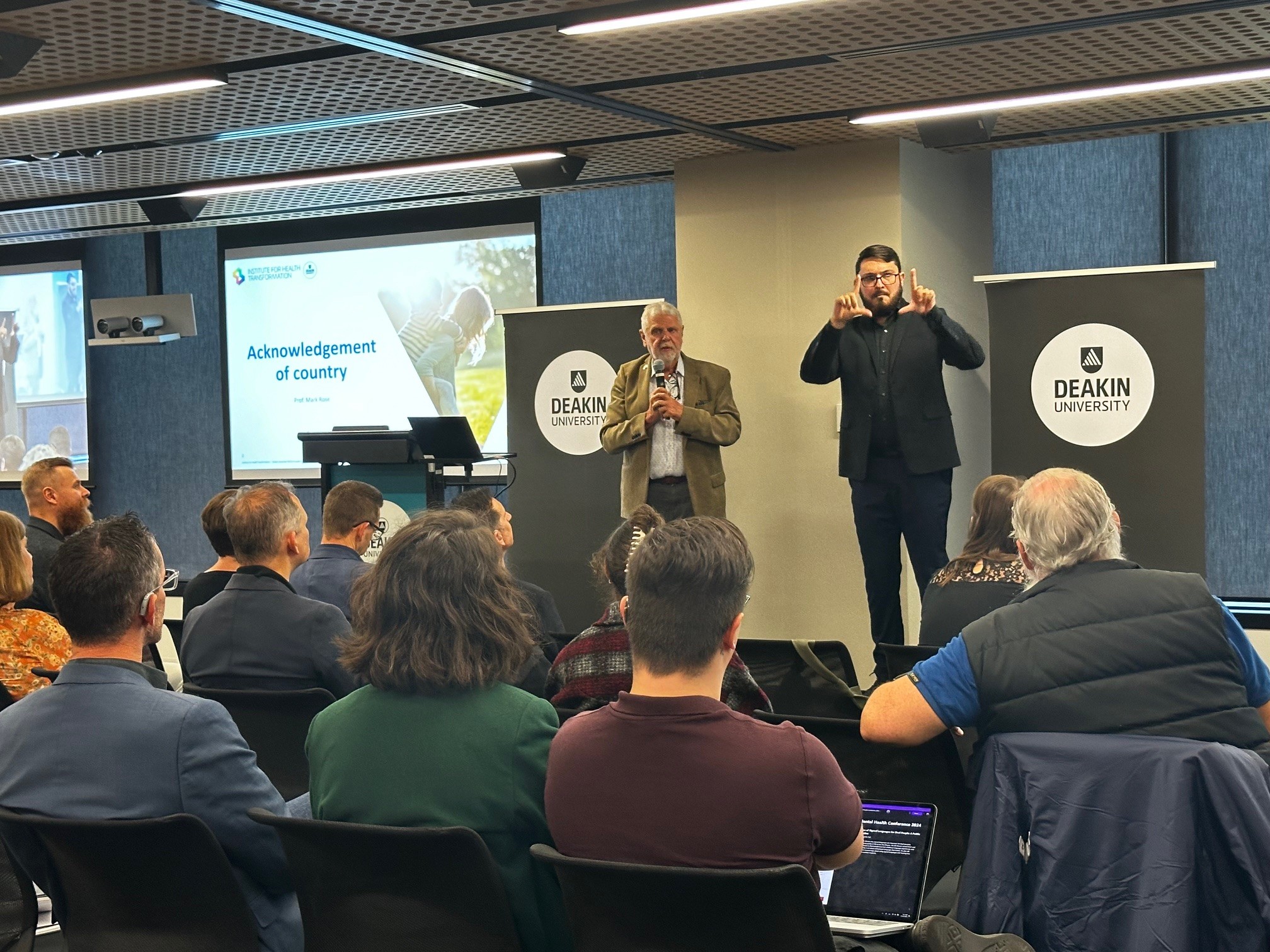
The Sir William Kilpatrick Churchill Fellowship to investigate global best practice Deaf mental health service provision in Europe, USA and Asia
Deaf people experience worse mental health outcomes compared to hearing people. Many adverse outcomes are preventable but Australia needs systemic change to better support deaf people’s mental health and ensure equitable service provision. Deaf children need good language access in family & school settings & deaf adults need targeted culturally-appropriate mental health services. In 2026, I will visit 12 mental health services (2 Norwegian hospitals & a cultural centre, Dutch university, Austrian health centre, 4 UK and 3 US mental health centres and Japanese association) to learn about each service, opportunities and challenges faced and lessons learnt to equip me to advocate for best practice in Australia.

An inspiring documentary that follows the journey of Ryan Emerson, a deaf ruckman who defies expectations in a sport where communication is key.
Presented by MIFF and AFL and supported by VicScreen
Director: Ramas McRae
Producer: Adam Bigum
Early childhood communication and adult mental health for deaf and hard of hearing Australians
Deaf and hard of hearing Australians identified extensive challenges resulting from poor early life communication experiences. These included higher rates of anxiety, depression, and suicidal ideation compared to their hearing counterparts. A holistic approach to improving access to language and communication, inclusive of Auslan, with deaf and hard of hearing children, across settings, is needed to support better mental health outcomes.
Deaf people experience higher rates of adverse mental health than hearing people. This study examined how early life communication access impacts adult mental health among Deaf Australians. Using a retrospective cross-sectional design, 340 Deaf adults completed an Auslan-accessible survey. Logistic regression showed that attending mainstream schools (with or without deaf facilities) was associated with higher odds of depression and suicidal ideation compared to attending deaf schools. Lack of access to deaf spaces before age 18 was also linked to suicidal ideation. Findings highlight the critical role of early communication environments in shaping long-term mental health for deaf individuals.

Since 2016, the AFL has demonstrated its commitment to accessibility by providing Auslan interpreters at every final, no matter where they take place in Australia. The 2025 AFL Grand Final was more than just a thrilling showcase of football—like every final it was an event of inclusion. Thanks to the collaborative efforts of Telstra, Expression Australia, and Deaf Interpreters Ramas McRae and Joanna Agius, Auslan users were able to fully experience one of Australia’s biggest sporting events.
While AFL games are largely visual, the pre-game entertainment, National Anthem, Welcome to Country, and quarter-time breaks are filled with spoken content, music, and atmosphere that Deaf fans have historically missed out on. Post-game interviews and celebrations—moments that capture the spirit of the match—also remain inaccessible without interpretation. This is where Auslan access makes all the difference.
At this year’s Grand Final, Deaf Interpreter Ramas McRae brought the passion, energy, and cultural depth of Auslan to tens of thousands of fans, showcasing the unique power of Deaf-led interpreting on a national stage.

Australian volunteers Ramas McRae, who is Deaf, and Rebecca Ladd, who is hearing, are sign language interpreters.
They have worked with the Mongolian Association of Sign Language Interpreters (MASLI) over three years to train sign language interpreter trainers, empower deaf leaders and advocate for Mongolian sign language to be officially recognised by the government.
Volunteering both overseas in Mongolia and remotely, discover how together with MASLI they are empowering sign language interpreters and the Deaf community in Mongolia.
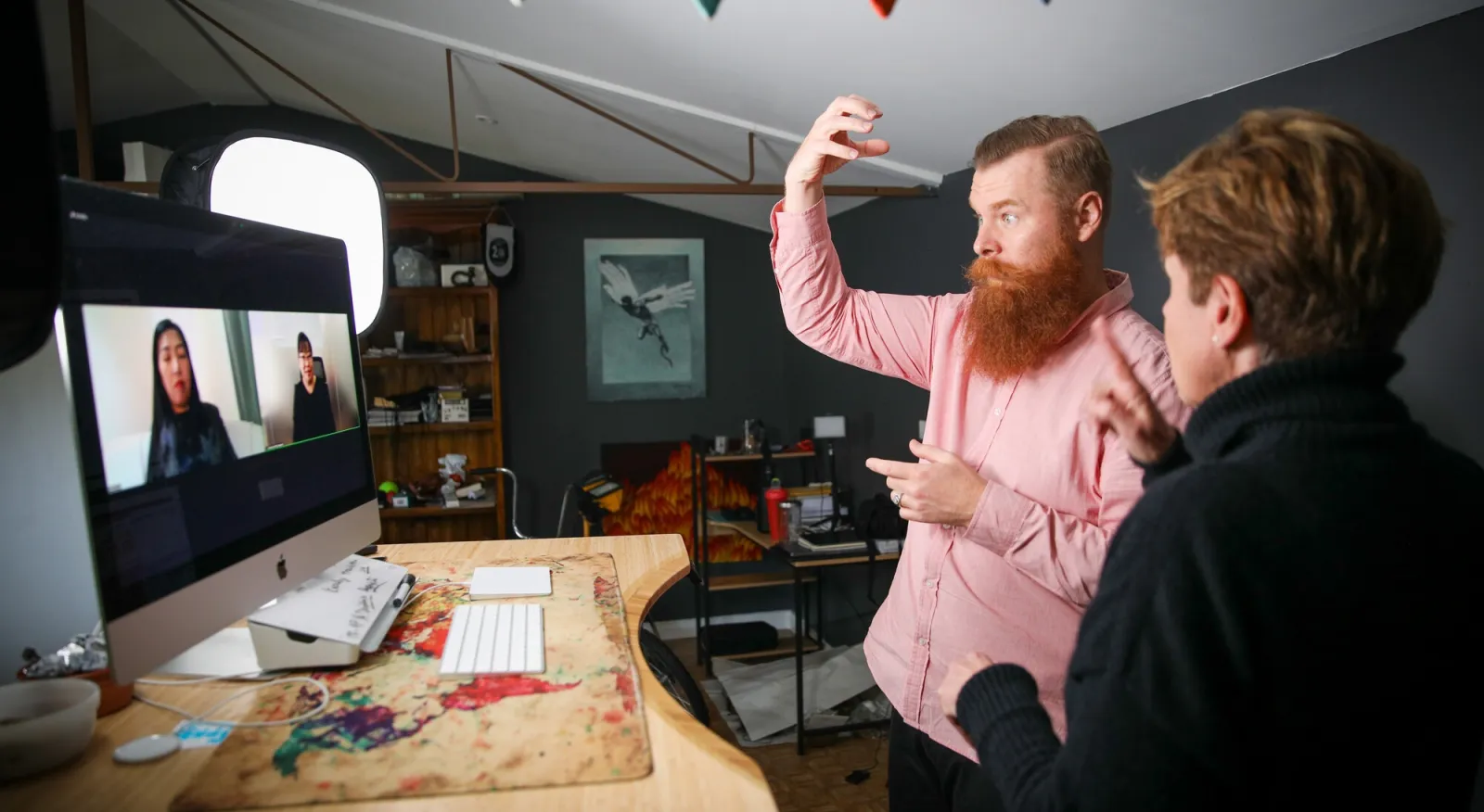
Ramas organised a one-day conference: AUSLAN SAVED MY LIFE! – the importance of embedding culture and language in mental health service provision for the Deaf community in Melbourne on 12 April 2024. This was partly sponsored by the Institute for Health Transformation and held at Deakin Downtown.